OT Wireless: Wi-Fi for factories, warehouses and plants
Wi-Fi will never be deterministic.
The job is to prove the worst case fits inside the application's timeout. This site translates what OT applications need into what the wireless design must deliver.
Budget: a CIP Safety input connection at its default settings, Rockwell Automation 1756-RM015. The scale ends at 1 s, TCP's minimum retransmission timeout (RFC 6298). Illustration only, not a safety calculation. Run your own numbers.
Start with these
The budget your design answers to, what the equipment publishes, and the words for your spec.
The field guide, in order
9 guides that build on each other, from why a drop matters to what to demand from your vendor.
- Guide 1What OT wireless isOT wireless is Wi-Fi, and sometimes a second radio, carrying traffic for machines instead of people, so it is judged by its worst gap rather than its average speed.
- Guide 2Why a one-second drop stops a plantIn OT a short network drop trips a connection timeout measured in milliseconds, the timeout stops the machine, and the stop lasts as long as recovery takes, so the wireless job is to prove the worst case fits inside the timeout.
- Guide 3The timing budgetStart from the application's timeout, subtract what the wired path and the endpoints need, and what remains is the worst-case outage your wireless design must hold.
- Guide 4How to measure a roam gapA roam gap is measured from the wired side and over the air at the same time, timed on one clock, repeated across enough roams to mean something, and judged by the longest gap you find.
- Guide 5Safety over wirelessA safety protocol turns a late or missing packet into a stop, so wireless trouble should cost you availability, not people; the hazard is a vehicle that needs a message to stop, and every millisecond it waits is distance traveled.
- Guide 6Airtime is finiteEvery client and every frame on a channel spends the same shared airtime, and prioritization only improves the odds, so inventory everything on the air and separate control traffic from bulk traffic before you count on QoS.
- Guide 76 GHz on the plant floor6 GHz buys you clean channels and airtime, but it does not shorten the roam between access points, and in several ways it makes the roam harder to get right.
- Guide 8Loss of commsEvery mobile robot has a vendor-defined response to a dropped network, set by timers you cannot see from the access point, and you need those numbers for every vehicle before you can say whether any roam is good enough.
- Guide 9What to demand from your wireless vendorA checklist for controls engineers who must specify wireless without being RF people, with nine demands, why each matters, and how to make the vendor prove it on your floor.
Why wireless drops on the plant floor
37 causes in 5 families. Each one says how it presents, how to confirm it, the fix, and how to design it out.
Where it happens
What runs there, what it needs from the network, and how wireless fails there.
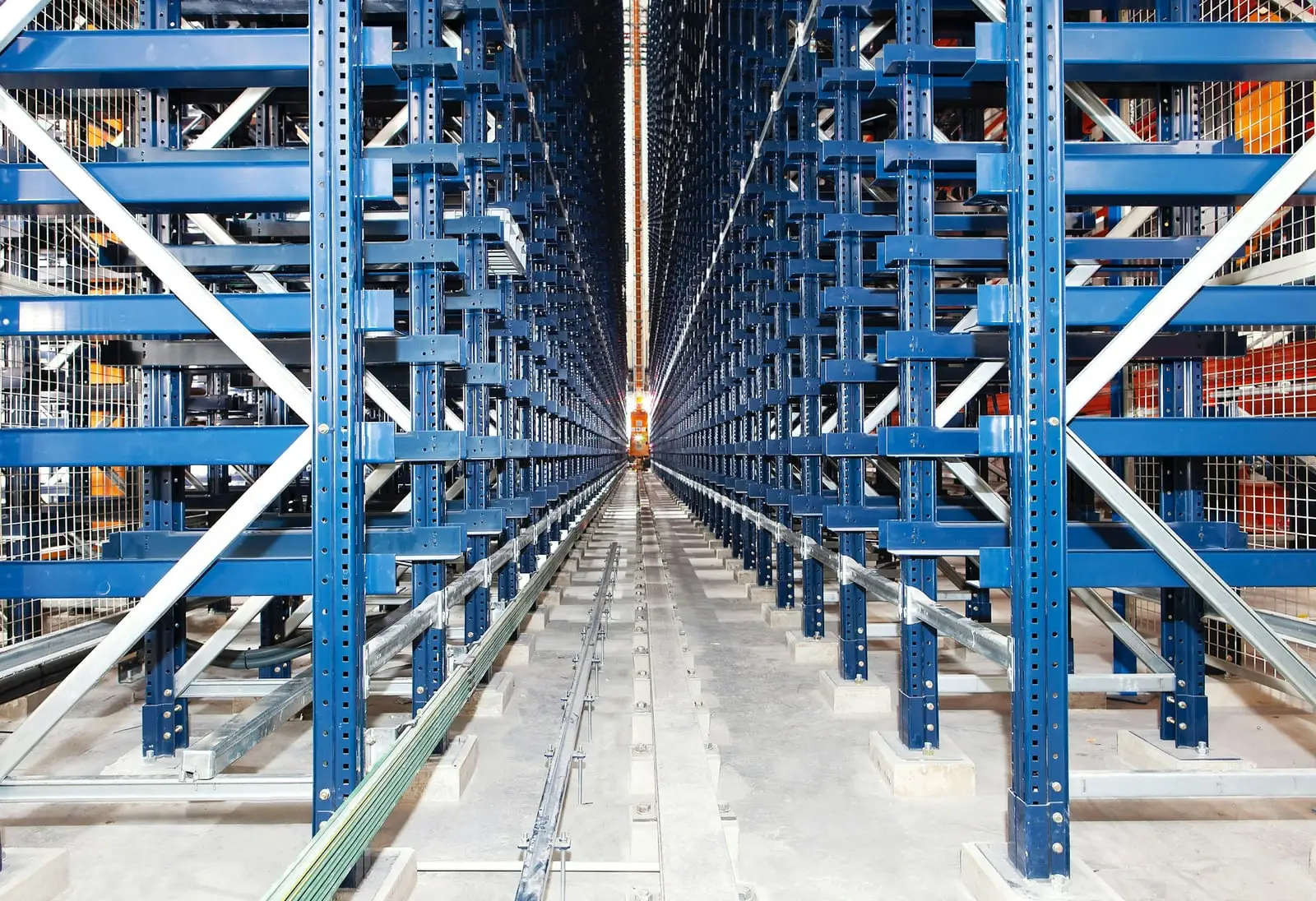 Automated warehouseIn an automated warehouse the RF changes with every pallet, the fleets keep getting denser, and a vehicle that drops inside an enclosed structure costs a shutdown, not a retry.
 Automotive assemblyOn an assembly line, one vehicle's dropped link can stop every station, and the cars being built bring their own Wi-Fi networks onto the floor.
 Outdoor yards and portsIn a yard or container terminal the steel moves every shift, the links are long, and the band rules change at the door, so an indoor Wi-Fi design does not carry over.
 Process plants and hazardous areasIn a process plant, the hazardous-area classification decides which radios you may install and where, so the wireless design starts from the classification drawings, not from the coverage map.
Tools
They run in your browser, show their working, and keep their inputs in the link so you can share a result.
Perspectives
- Prioritization is not reservation.QoS marking changes the odds on a shared channel; only separation comes close to guaranteeing control traffic its airtime.
- Time is distance.Widening a timeout so a connection survives the roam is paid for in meters a vehicle travels before it starts to stop.
- Wired determinism worked. Wireless broke the assumption.The hardest problem in OT wireless is not bandwidth or coverage; it is the roam, an outage the client schedules for itself.
Signal
Oct 8, 2026
- Europe's 6 GHz Wi-Fi stays at 480 MHz while mobile eyes the restIf you plan 6 GHz for a European site, assume only the lower 480 MHz for now. That limits how many wide, clean channels you get per area.
- New high-power 900 MHz Wi-Fi HaLow M.2 radio targets industrial IoTA HaLow module gives embedded device makers a way to add sub-GHz Wi-Fi to sensors and gateways. It matters for long-range, low-rate telemetry across yards or large buildings, not for control traffic.

By Ben Rutter, industrial network engineer. Every number links to its source, and nothing goes live until Ben approves it. How the content is made.